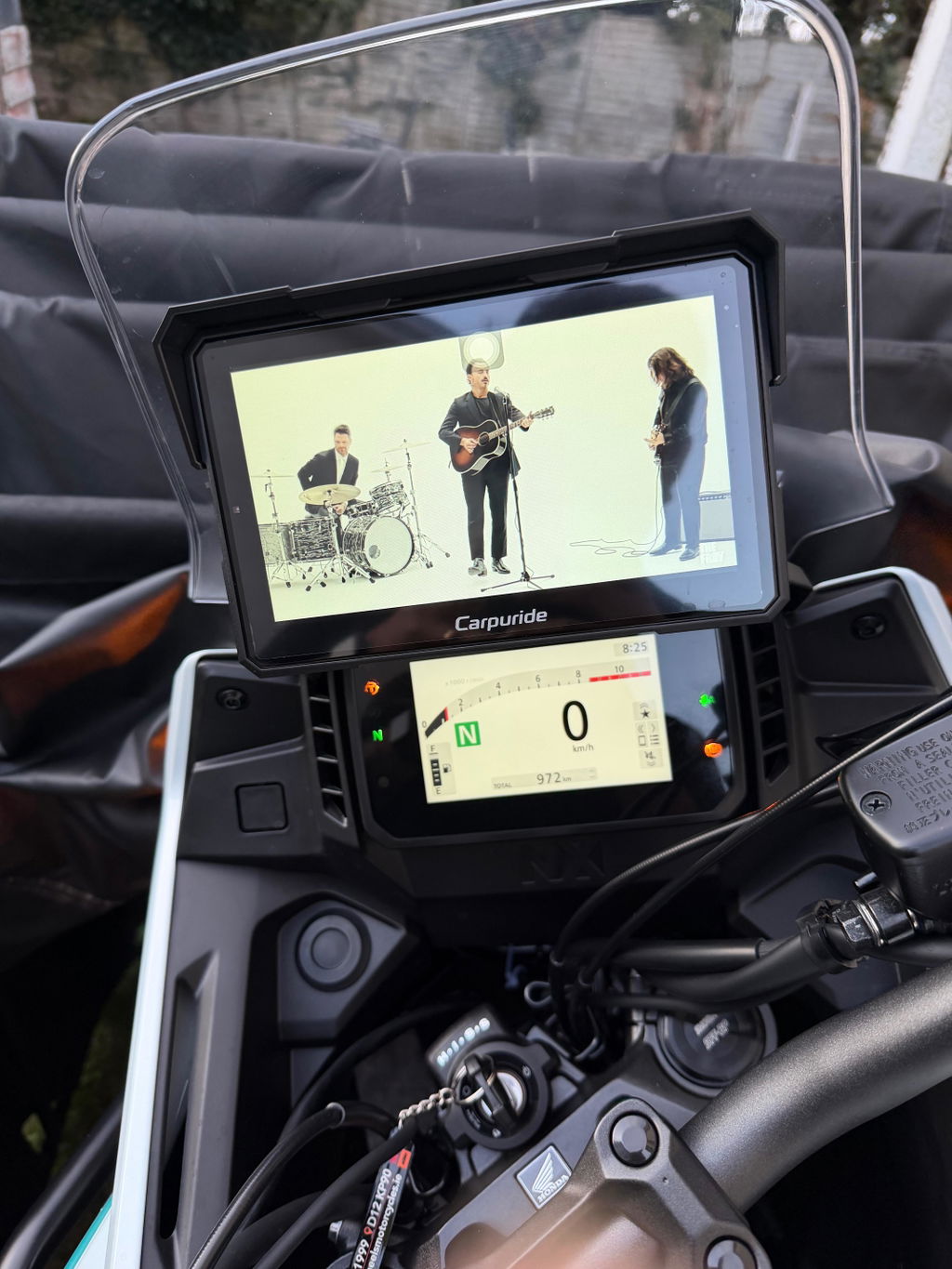
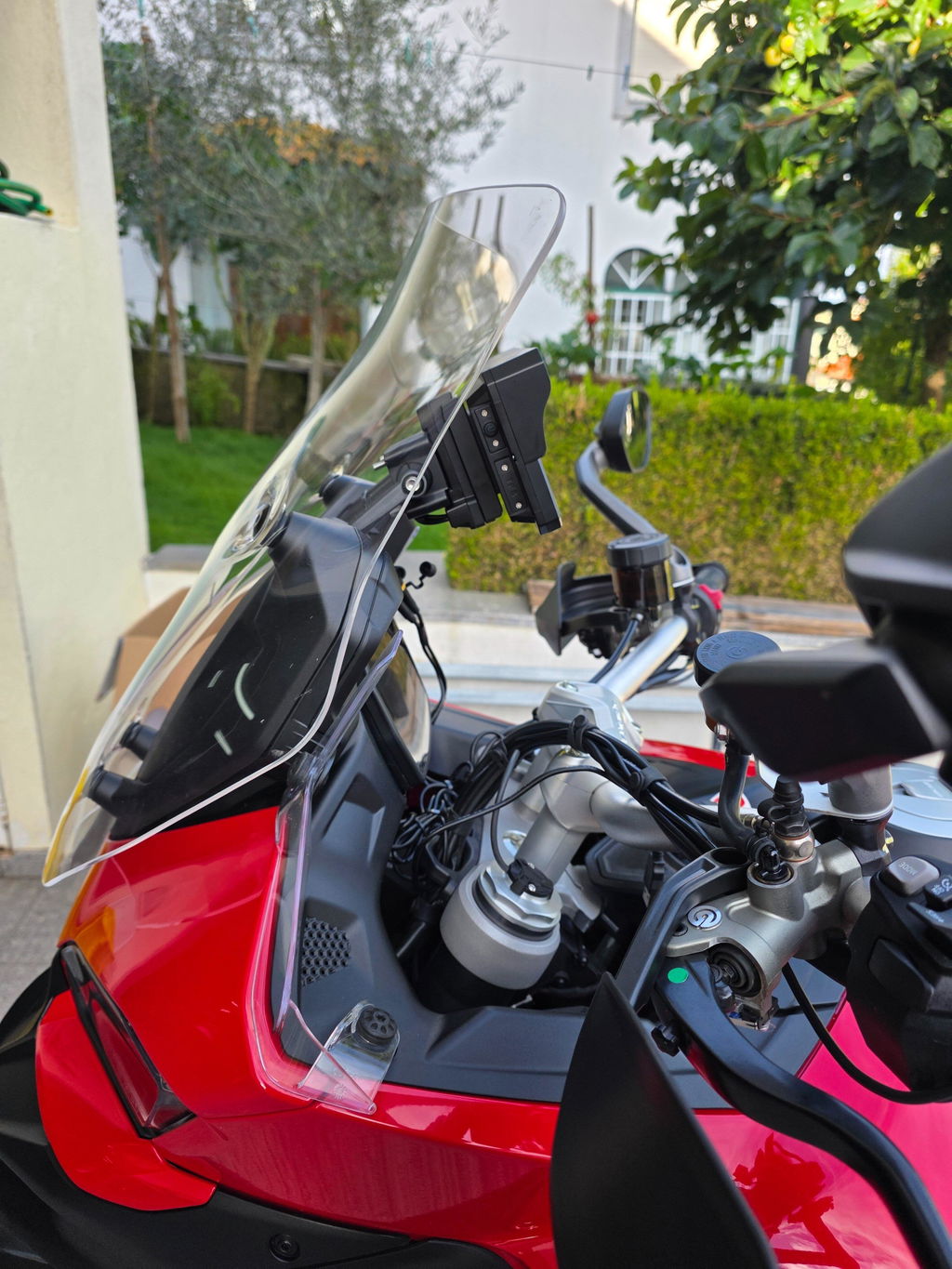
Turning Your Display into a True Riding Control Hub
Most motorcycle CarPlay screens stop at one function: display.
They mirror your phone.
They show navigation.
They play music.
But they don't control your ride.
There is a critical difference between a screen that shows information and a system that manages it. And that difference comes down to Bluetooth architecture.
Two Ways Riders Connect — Only One Is Built for Control
There are two common connection methods used in the market today.
1. Phone-Centered Connection (Single Bluetooth)
- Phone connects to headset
- Phone connects to CarPlay screen
- Audio is controlled by the phone
This setup is simple.
It works.
But the phone remains the control center.
When a call comes in, when navigation speaks, when music competes with alerts — the phone decides everything.
Your motorcycle screen is only a viewer.
2. Dual Bluetooth Architecture (CarPlay as Audio Hub)
- Phone connects to CarPlay unit
- CarPlay unit connects directly to your Bluetooth headset
- Audio routing is managed by the motorcycle display
Now the control center moves to where it belongs:
Right in front of the rider.
This changes everything.
Why Audio Control Location Matters at 70 MPH
When riding at highway speed, small delays matter.
With a phone-centered system:
- Audio priority is managed remotely
- Volume adjustments rely on phone logic
- Multi-device conflicts are more common
With a dual Bluetooth system:
- Navigation automatically lowers music
- Incoming calls are managed at the screen level
- Audio routing stays stable even during long-distance rides
It reduces cognitive load.
And cognitive load reduction is safety.
The Truth About Dual Bluetooth: Why Quality Matters More Than Architecture
If you've researched motorcycle CarPlay systems, you've likely encountered conflicting opinions about dual Bluetooth.
Some sources claim single Bluetooth is more stable.
Others warn about audio quality degradation.
Many recommend avoiding dual Bluetooth entirely.
They're not wrong — but they're not seeing the full picture.
The market is flooded with low-cost dual Bluetooth units that:
- Use cheap Bluetooth chipsets
- Lack proper audio codec optimization
- Re-compress audio multiple times, causing latency
- Drop connections frequently on long rides
These products have created a negative perception of dual Bluetooth as a concept.
But the problem isn't the architecture.
It's the execution.
What Separates Entry-Level from Engineering-Grade Dual Bluetooth
A properly engineered dual Bluetooth system is fundamentally different:
| Component | Low-Cost Systems | Engineering-Grade Systems |
|---|---|---|
| Bluetooth Chipset | Single shared module | Independent dual modules |
| Audio Processing | Re-encoded multiple times | Streamlined direct path |
| Codec Support | Basic SBC only | AAC, aptX, LDAC support |
| Firmware Optimization | Generic Android | Custom audio routing logic |
| Reconnection Logic | Manual intervention needed | Automatic priority handling |
This is why you'll find riders with vastly different experiences.
One rider using a budget unit will experience constant dropouts.
Another using a premium system will never think about connectivity again.
Stability: The Misunderstood Advantage
Many riders assume more Bluetooth connections mean more instability.
That assumption is correct — when hardware is weak.
A poorly designed dual Bluetooth system will always be less stable than a simple phone-to-headset connection.
But a properly engineered dual Bluetooth system uses:
- Independent Bluetooth modules (not shared bandwidth)
- Optimized audio routing algorithms
- Dedicated signal management with priority queuing
- Advanced reconnection logic after engine restart
Instead of increasing failure points, it centralizes them under intelligent control.
The result:
- Cleaner reconnection after engine restart
- Less headset interference from phone notifications
- Reduced audio conflicts with intercom systems
- Consistent performance across multi-hour rides
In long-distance touring scenarios, this becomes a measurable advantage.
Sound Quality and Latency — What Really Happens
A common concern is audio degradation.
This concern is valid for low-cost systems.
In budget dual Bluetooth units:
- Audio is decoded from the phone
- Re-encoded by the CarPlay unit
- Transmitted again to the headset
- Each step adds compression artifacts and latency
The result: noticeable delay, reduced clarity, and sync issues with navigation prompts.
In a well-optimized dual Bluetooth unit:
- Audio path is streamlined with minimal re-encoding
- High-quality codecs (AAC, aptX) are maintained end-to-end
- Latency remains within imperceptible range (<40ms)
- Music clarity matches direct phone connection
The difference is not about "having dual Bluetooth."
It is about how the firmware handles signal priority, codec negotiation, and audio transfer.
This is where engineering separates premium systems from entry-level displays.
The Strategic Advantage for Long-Distance Riders
On short urban rides, any system may feel sufficient.
On multi-hour rides:
- Heat affects devices
- Battery consumption increases
- Connection drops become frustrating
- Intercom conflicts appear
- Manual reconnection becomes dangerous
A screen that only mirrors your phone adds complexity.
A screen that manages your audio simplifies it.
Dual Bluetooth architecture was built for riders who:
- Travel long distances regularly
- Use helmet intercom systems
- Take frequent calls while riding
- Rely heavily on turn-by-turn navigation
- Want power-on-and-ride convenience
It turns the CarPlay screen into a riding command interface — but only when properly implemented.
Single Bluetooth vs Dual Bluetooth — A Clear Comparison
| Feature | Single Bluetooth | Dual Bluetooth (Budget) | Dual Bluetooth (Premium) |
|---|---|---|---|
| Audio Control | Phone | Screen (unstable) | Screen (optimized) |
| Stability | High | Low-Moderate | High |
| Audio Quality | Excellent | Degraded | Excellent |
| Convenience | Manual pairing | Auto-connect (unreliable) | Auto-connect (reliable) |
| Navigation Priority | Phone-managed | Screen-managed (buggy) | Screen-managed (smart) |
| Long-Ride Performance | Good | Poor | Excellent |
Beyond Today: Future-Ready Design
Dual Bluetooth is not just about present convenience.
It enables:
- OTA firmware optimization for audio routing
- Customizable audio priority profiles
- Advanced integration with cameras and TPMS voice alerts
- Smarter headset compatibility updates
- Multi-device management (rider + passenger headsets)
A single Bluetooth architecture cannot scale in the same way.
If the future of motorcycling includes more connected devices, the screen must act as the central coordinator.
But this only works when the foundation is solid.
How to Choose: A Practical Framework
Choose Single Bluetooth (Phone-Centered) if:
- You ride primarily short distances (<1 hour)
- You're using a budget CarPlay screen
- You already have a reliable phone-to-headset setup
- You prioritize simplicity over convenience
Choose Dual Bluetooth (Screen-Centered) if:
- You invest in premium hardware (verified chipset quality)
- You ride long distances regularly
- You want power-on-and-ride convenience
- You use intercom systems or multiple audio sources
- You value centralized control over manual management
Critical: Verify before buying
- What Bluetooth chipset is used? (Qualcomm preferred)
- Does it support AAC or aptX codecs?
- What do long-distance riders report about stability?
- Is there active firmware development?
Don't buy dual Bluetooth based on features alone.
Buy it based on engineering quality.
The Bigger Philosophy
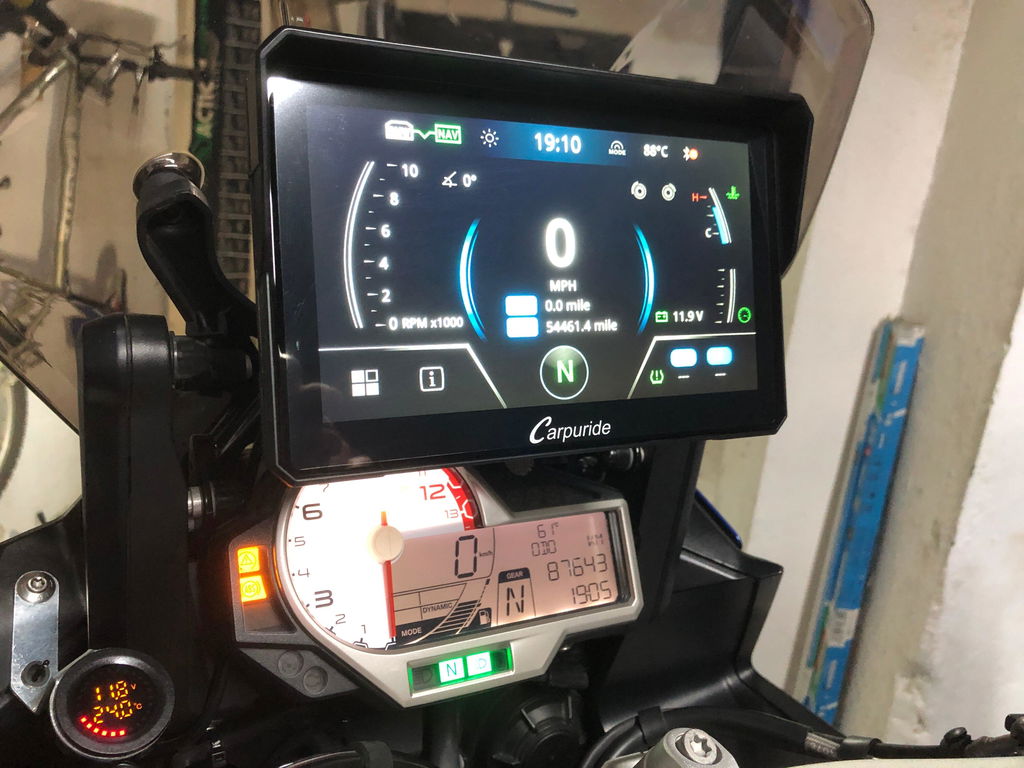
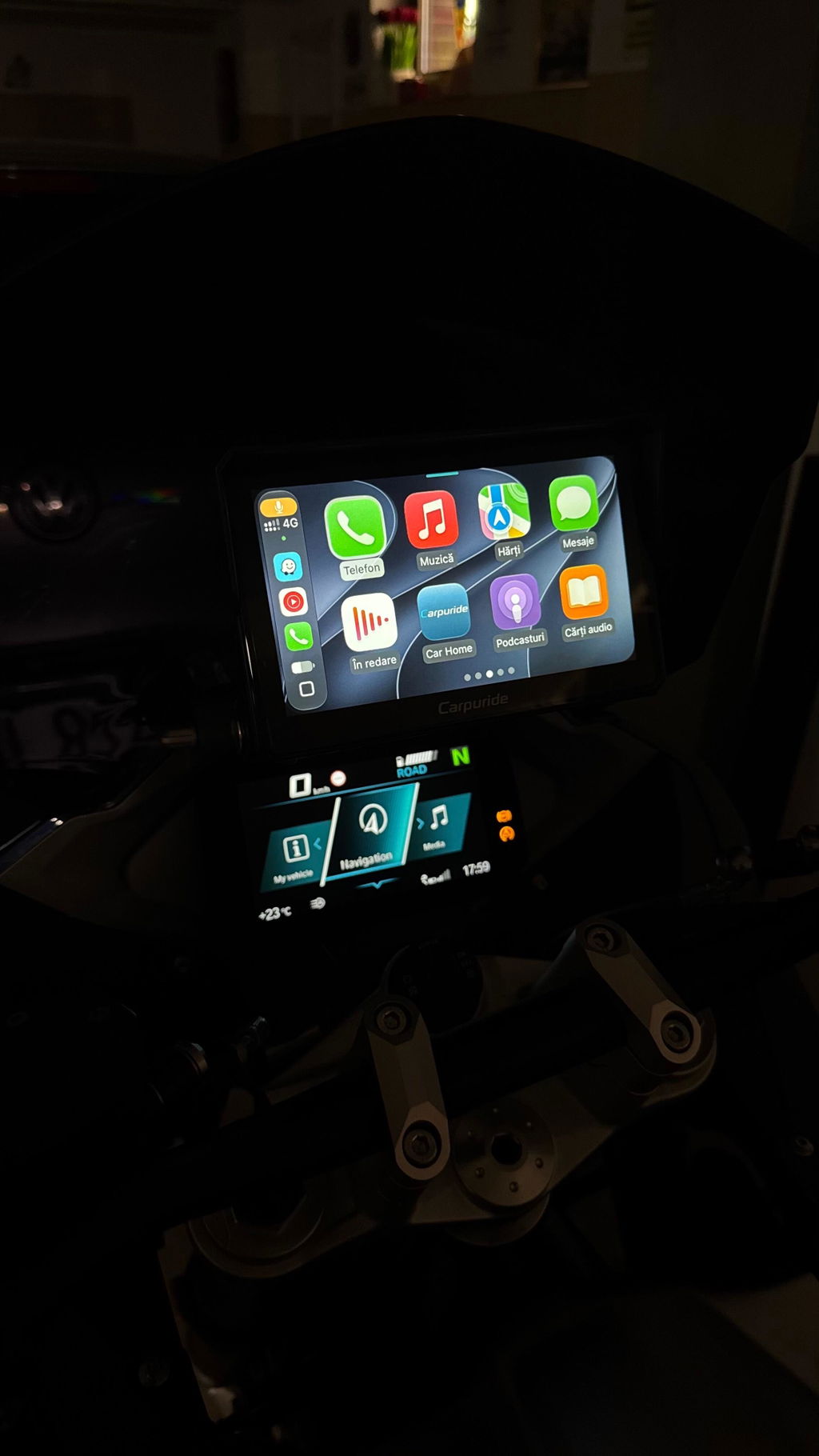
A motorcycle CarPlay screen should not be a passive mirror.
It should be the rider's command center.
When control shifts from the phone to the motorcycle display, riding becomes:
- Cleaner
- Safer
- More intuitive
Technology should reduce distraction, not multiply it.
And the foundation of that shift starts with how Bluetooth is designed — and how well it's executed.
Final Thought
Dual Bluetooth is not a feature for spec sheets.
It is a structural decision.
It determines whether your screen is simply displaying your phone —
or managing your ride.
But only when the engineering matches the ambition.
If you are designing for serious riders, there is only one logical direction:
Build it right, or don't build it at all.